| ABOUT CIAG | PROGRAMS | RESOURCES | 
|

|
Home | |
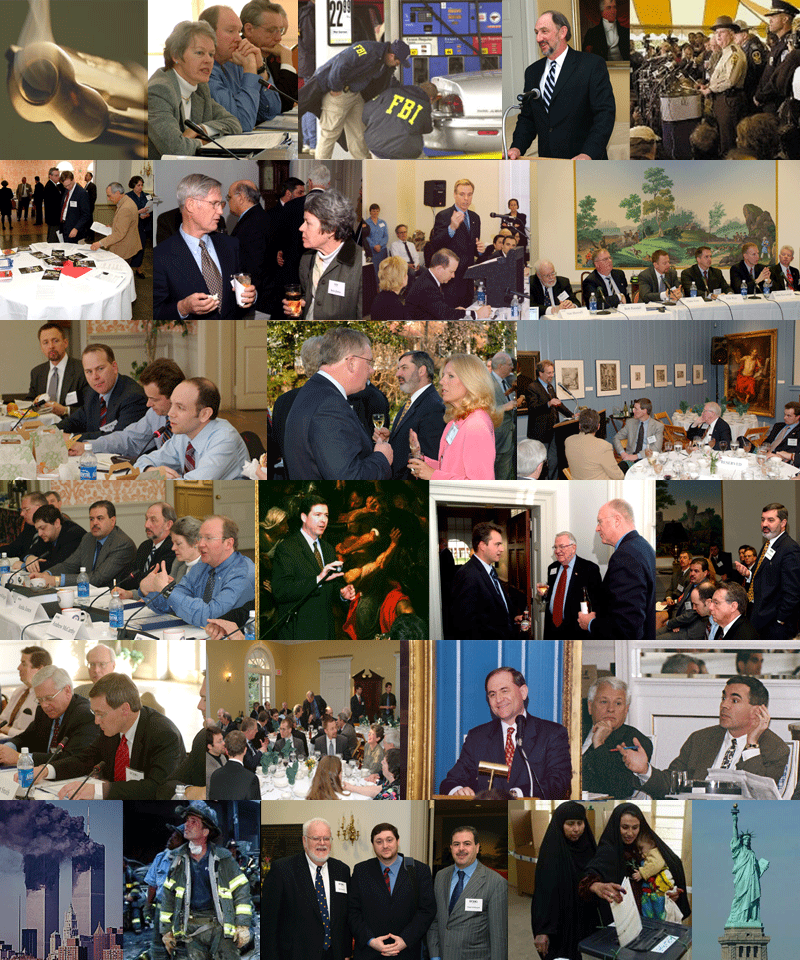
Upcoming EventsOctober 17 - 18, 2005 Catastrophe: Coping Through Improvisation Darden Executive Center Recent ConferencesApril 3 - 5, 2005 Hostage to Terrorism: Governmental and Non-Governmental Response Strategies In the NewsFall 2005 Masters of Disaster, Confronting Crisis Worldwide March 11, 2005 U.S. Doctors Took Clandestine Trip to Treat Yushchenko Critical Incident Analysis GroupCritical Incident - an event that has the potential for causing social trauma and undermining social trust, creating fear that may have impact on community life and even on the practice of democracy. A Message from the Executive DirectorHow do we anticipate terrorism’s trajectory or mobilize society to face it? How does one photograph a complex object in motion? Leadership, crisis communication, and societal resilience are just some of the factors that impact our understanding of current critical incidents. In our rapidly changing world, whether one is a photographer or crisis analyst- light, timing and experience are crucial. Experienced photographers are now confronted by dramatically new digital technology. Likewise, even the most seasoned critical incident leaders, managers and responders operate during an avalanche of new policy within an information technology driven blizzard of intelligence. These are not new challenges. Before photography, the French sculptor Houdon somehow captured the images of both Jefferson and Washington in a way that reflected the founding fathers’ own grasp of the real and ideal. Eighty years later, Matthew Brady photographed Abraham Lincoln as both faced the challenges of perspective, timing and anticipation. In so doing, both gained greater battlefield experience. Light is central, whether one is managing critical incidents or capturing images. Quality and placement of illumination are both crucial. Poor light distorts the quality of the photo, just as inadequate information distorts understanding of the incident. Perspective is equally important. If improperly placed, a single light source is inadequate. Then, no matter the light’s quality, the shutter’s click produces shadow and mystery within the photo. Similarly, a single professional’s perspective highlights known areas while obscuring experiences of others. Multiple perspectives, similar to multiple light sources, provide the most realistic image and understanding for the viewer. Our multidisciplinary leaders, managers and responders within the CIAG know that illumination and perspective are critical both in the decision-making process of a critical incident, and also in its later analysis. By design, significant threats are often obscured. Illumination and perspective provide focus and clarity, which are essential to understanding. Timing is important on a number of levels. The best photographers are similar to the best critical incident leaders, managers and responders. They all anticipate the event by being properly placed, responding quickly. If photographers were only interested in capturing still life images of the leopard from the taxidermist’s table, timing would have little consequence. Likewise, our leaders rarely have the luxury of the retrospectroscope, although this instrument is freely used by those who have not stood in the arena. Threats to our democracy are also ever-mutating. Anticipation is a virtue in a mercurial, violent world. CIAG participants appreciate timing and anticipation as they lead, manage and respond. These are important qualities for professionals today, whether they are responsible for policy, scholarship or sound business practice. Experience is similar to wisdom. A photographer requires more than just good equipment and instruction. Experience with the vagaries of light and timing over many years must precede the finest work. CIAG participants possess and value experience in the operation and understanding of critical incidents. Whether providing urgent consultation on a diagnostic dilemma, articulating and developing strategic public preparedness responses such as community shielding, or examining critical incidents through a multidisciplinary lens of crisis analysis, the Critical Incident Analysis Group benefits from the intersecting perspectives of government, academe and the private sector. By volunteering their time and counsel, CIAG participants distill current knowledge through the prism of government, academe and the private sector, providing an opportunity to identify and build productive networks and policies that enhance resilience without diminishing our liberties. Greg Saathoff M.D. To Learn More about CIAGAbout CIAG - The Mission and People Behind the Organization Key Programs - Focused on Homeland Security and Preparedness Resources - Building Knowledge from Experience |
||
 Conference Brochure
QUICK REFERENCE: |
||
| ABOUT CIAG | ||
| PROGRAMS | ||
| RESOURCES | ||